
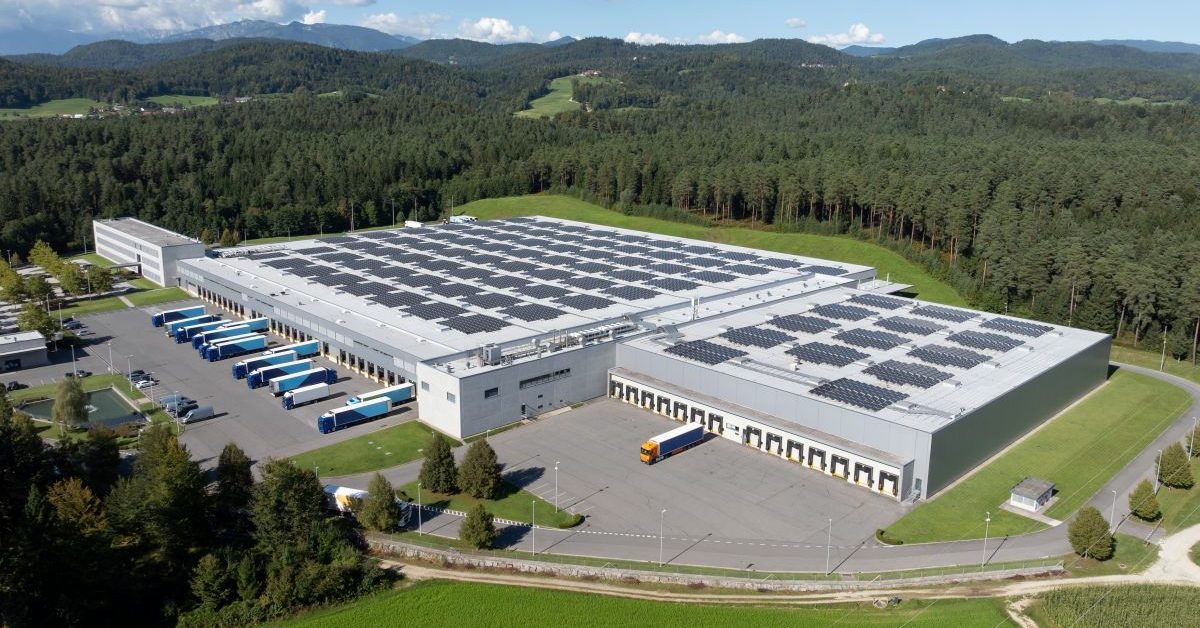
Warehouse Efficiency: The Overlooked Carbon Opportunity in Industrial Buildings
The warehouse is a key part of any effective and efficient supply chain. Industrial real estate plays a massive role in the global built environment, yet its participation in carbon mitigation initiatives is often secondary to commercial and residential sectors. Warehouses are typically major sources of carbon emissions, representing a significant frontier for decarbonisation.
The transition toward industrial assets that operate efficiently and ethically has gone beyond mere corporate responsibility and has become a major contributor to achieving long-term resilience. Engineers and architects who start building structures that address both operational energy and carbon output can better position themselves for success.
In this article, we look at warehouse efficiency and the often overlooked carbon opportunity in industrial buildings.
Key Benefits of Reducing Carbon in the Industrial Setting
When approached strategically, carbon reduction in industrial settings can deliver significant financial benefits through operational efficiencies and reduced expenditure. Buildings that consume less energy produce lower utility bills, insulating owners against utility price volatility.
Decarbonisation also helps institutions improve their asset valuation, leading to stronger capital growth. In modern times, investors increasingly prioritise eco-friendly properties to meet their ESG mandates. Buildings designed for sustainability are often in higher demand, leading to higher rents and lower vacancy rates.
While carbon tax obligations vary from region to region, they are growing increasingly prevalent as sustainability movements continue to gain traction. Developing carbon-friendly buildings allows institutions to future-proof against changing regulatory environments, avoiding the risk of becoming unleaseable assets because they fail to meet new performance standards. Proactive efficiency is an essential strategy for long-term investment security.
Mitigating Carbon through Envelope Performance
The building envelope is a key component in the development of sustainable buildings, serving as a primary deterrent of operational energy demand. Traditional metal building systems are often prone to thermal bridging, in which structural steel members facilitate heat transfer through the insulation layer. This reduces the assembly’s R-value, prompting the building’s HVAC systems to compensate for the resulting energy loss.
High-performance facades must minimise thermal barrier gaps to maintain stable internal temperatures. Liner systems that fill purlin cavities improve a building’s thermal resistance. This configuration avoids the temperature fluctuations that deteriorate physical infrastructure and helps manage moisture levels within the envelope.
Envelope optimisation also involves managing air tightness. It is imperative that outdoor air not enter the facility, as it can affect internal temperatures. Advanced vapour barriers and sealed joints ensure the mechanical systems operate within their intended parameters. Implementing such infrastructure allows for less energy consumption while ensuring equipment does not corrode and grow mould.
Advanced Systems and the Movement toward Electrification
Industrial buildings are moving toward total electrification, which can provide an alternative to on-site fossil fuel combustion. Transitioning from gas-fired space heating to electric heat pumps allows the building to leverage renewable energy sources. This works particularly well when facility roofs integrate solar panelling, effectively turning an inert surface into an energy-generating mechanism.
Managing the massive air volumes within a warehouse requires innovative mechanical strategies. High-Volume Low-Speed fans allow destratification, ensuring that conditioned air reaches the occupied floor rather than gathering at the ceiling. Additionally, decoupling sensible and latent cooling loads allows HVAC systems to manage humidity and temperature independently. This approach is far more efficient than alternatives that overcool the air.
Cold storage facilities represent the highest energy intensity within the industrial sector. These buildings require complex refrigeration systems that use refrigerants such as carbon dioxide or ammonia. Incorporating phase-change materials within the floor slab or wall panels can further stabilise temperatures. These materials absorb and release thermal energy, reducing the requirement for mechanical cooling systems.
Addressing Embodied Carbon
As a facility’s operational efficiency increases, so does its embodied carbon. This includes emissions generated during the extraction, manufacturing and transport of materials like concrete and steel. Advanced professionals now utilise Whole Life Carbon Assessments to evaluate the environmental footprint of an asset from initial construction through to its eventual demolition.
This reality highlights the need for material innovation. Specifying low-carbon concrete mixes can significantly reduce initial emissions. Such formulations forgo the industry-standard Portland cement and use fly ash or slag, thereby significantly reducing emissions. Timber-hybrid structures for industrial spans are also seeing a surge in the sector, offering a high-performance alternative to traditional tilt-up concrete.
Circular economy principles are becoming increasingly prominent, with Design for Deconstruction serving as a guiding philosophy for many projects. Engineering industrial buildings so that materials like steel can be salvaged and reused at the end of their life cycle preserves the energy already invested.
With standardised connections and documented material passports, this approach ensures that the warehouse remains a resource bank rather than contributing to future industrial waste. The approaches are far more valuable and sincere than carbon offsetting, which often diverts attention from the core operational issue in preference of other initiatives that often feel performative.
Validation and Measurement
Establishing the credibility of a decarbonised asset requires rigorous validation through recognised benchmarking standards. Industrial builders benefit significantly from third-party certification from recognised industry-wide bodies, which ensures their emission rates meet global standards and provides investors with the data they need to confidently invest.
Utilising advanced energy monitoring systems helps managers track building performance and enables real-time data analysis. This means performance anomalies can be identified instantly, and systems can be optimised based on actual usage patterns. This data-driven approach enables maximum sustainable pragmatism, ensuring that facilities’ footprints match projections from the design phase and that long-term goals are advancing.
Building Assets for the Future
As industrial decarbonisation and the technologies supporting it grow, the industrial builders who emphasise innovative sustainability become increasingly resilient. By embracing advanced infrastructure strategies that reduce carbon emissions, architects and engineers can future-proof buildings and their careers.

If you or a member of your team has been making green improvements in your warehouse or wider supply chain, why not consider nominating them for a Sustain Chain Award?