
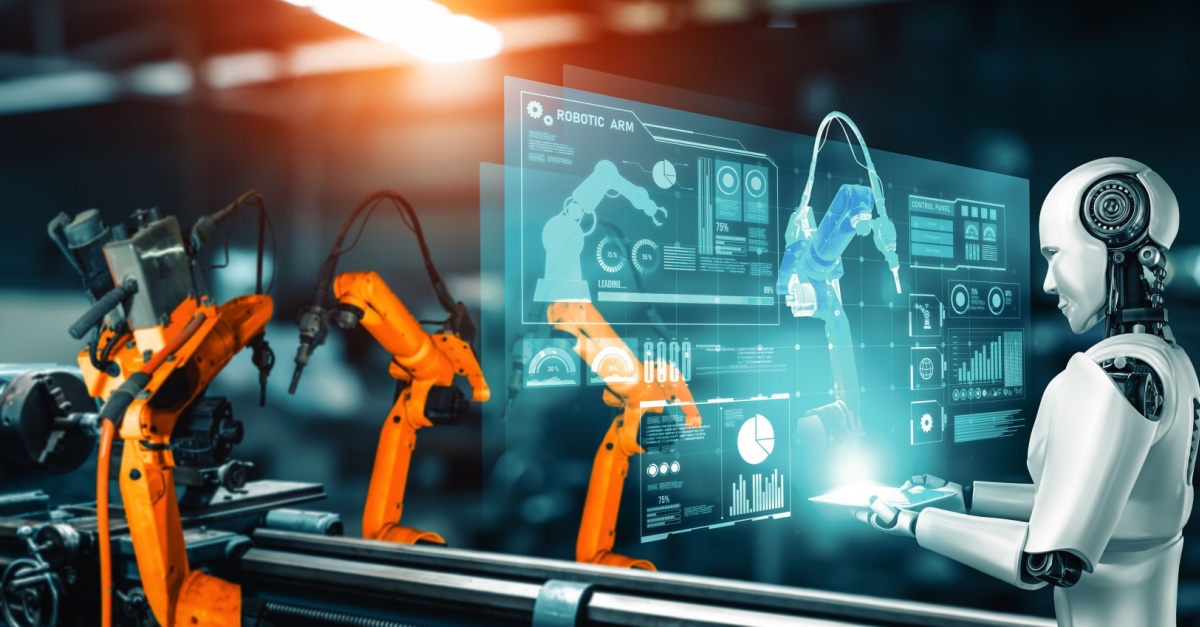
Smart Manufacturing Trends Shaping the Future of Production
The industrial methods of manufacturing, designing and delivering products have been greatly changed with the emergence of smart manufacturing. It is even the fastest development of digital technology that has led to production plants being more and more interconnected and data-oriented. Manufacturers, confronted with international competition, supply chain disruptions and higher demand from customers, now consider smart manufacturing trends as the main factors of the next generation of production.
This is no longer a change that only big companies experience. Manufacturers of different scales are engaging with creative digital solutions in order to enhance their efficiency, flexibility and product quality. Various new trends in technology are influencing the way we produce things in the future.
The Rise of Industry 4.0 and Connected Factories
Industry 4.0 stands for the fusion of physical production systems with digital technologies. The heart of Industry 4.0 is smart factories, which are connected and networked. These smart, connected devices, machines, sensors and software systems communicate with each other in real time. The Industrial Internet of Things (IIoT) is what allows machinery to gather and share manufacturing data on the shop floor.
This level of connectivity provides more transparency in the operations, hence, managers are able to monitor the productivity, identify the inefficiencies and respond swiftly to the problems. On top of that, smart sensors and interconnected devices enable predictive maintenance, whereby the maintenance teams can fix the machinery problems before they cause costly downtime.
First of all, the manufacturers are now designing highly flexible manufacturing systems as the connectivity spreads. Such systems can change their operation in line with the demand level; they can also be used for product customisation, and, without much human intervention, they might even fully optimise the workflows.
Artificial Intelligence and Advanced Analytics in Manufacturing
Recently, artificial intelligence started to leave the experimental stage and enter the practical application stage in manufacturing. Factory AI, driven tools look deeply into enormous amounts of production data to find the patterns that human methods could miss. Machine learning algorithms are used for scheduling optimisation, quality control and resource management.
Advanced analytics provides relevant information for decision-making at the various levels of the organisation. For instance, AI-enabled systems can forecast product failure by checking the sensor data and comparing it with the record of past performance. Waste is decreased, and efficiency is improved with the help of early detection. In supply chain management, predictive analytics has improved in demand forecasting and inventory control.
On the whole, AI and analytics are turning reactive manufacturing into proactive manufacturing. Instead of solving problems after they have arisen, organisations are able to foresee difficulties and keep on improving their processes.
Automation, Robotics and Human Collaboration
Automation has been part of industrial production for a long time, but current robotics, compared with the earlier systems, are more versatile and intelligent. Collaborative robots, also called cobots, are intended to work in the same space as human workers without any risk of harm. They perform monotonous or heavy physical tasks; thus, the human employees are free to engage in problem-solving and supervisory activities.
This kind of human and machine collaboration opens the door to greater productivity without necessarily displacing skilled labour. On the contrary, it leads to the emergence of new roles in robotics programming, system integration, and data analysis. Moreover, intelligent automation also brings about consistency as one of its benefits through reduced variation in the manufacturing processes.
With the evolution of robotics technology, manufacturers have been getting more and more into the use of autonomous mobile robots for material handling and logistics. These robots help simplify the in-house transportation and thus contribute to the overall increase in the effectiveness of the workflow.
Digital Twins and Virtual Simulation
A digital twin refers to a very accurate virtual image of a physical asset. Using Internet of Things (IoT) technology, digital twins associate the actual equipment with digital models that show the same behaviour as the real equipment and in real time.
This technology provides manufacturers with a means to perform simulations of the performance, test the processes and discover failures that might occur in a virtual environment prior to making the changes in the physical world. Industries such as aviation use digital twins for maintenance forecasting.
Major manufacturers have also collaborated and demonstrated through digital factory twins how production flexibility can be increased, and time to market reduced.
Through virtual testing, digital twins help to reduce experimental risks and thus reduce losses in productivity resulting from learning curves. They are a source of continuous real-time feedback and thus facilitate ongoing improvement. Besides, digital twin systems can cover supply chain and capacity planning, thus providing a complete picture of production operations.
Sustainable and Energy-Efficient Production
Sustainability is now a key priority of manufacturing industries. Smart manufacturing technologies enable manufacturers to fast-track energy, efficiency and resource saving measures. The adoption of real-time monitoring systems can help in finding ways for waste reduction and resource saving.
Energy management platforms can limit the use of equipment in such a way that power consumption is reduced without affecting productivity. Advanced process control systems not only make production more material efficient but also help in lowering the levels of pollution.
The adoption of these approaches is one of the ways to handle regulatory requirements and answer the public call for responsible production. Besides these, they generate a set of benefits from business perspectives. Inviting digital sustainable transformation, manufacturers are able to save on operating costs, raise their level of resilience, and enhance their ethical performance while staying competitive in the marketplace.
Cybersecurity in Smart Manufacturing Environments
As factories get more interconnected, cybersecurity is becoming more essential. Networked factory systems represent attractive targets for hacker attacks which may cause interruptions of the manufacturing process or leaks of secret information. Safeguarding the digital backbone is crucial for keeping the trust of customers and partners as well as for the normal running of the business.
To a large extent, the manufacturing companies nowadays rely on secure architectures, encryptions and real-time monitoring systems to protect their networks from external intrusions. Besides technical solutions, staff awareness and a set of procedures ensuring security play a significant role in a total cybersecurity plan. Through having strong security measures in place, businesses can confidently move forward in the implementation of smart factories.
Final Thoughts
Smart manufacturing is revolutionising how things are made by connecting, making smart and automating. Also, Industry 4.0, AI, powered analytics, digital twins, and green practices are reshaping manufacturing into more efficient and versatile environments.
As digital transformation gains momentum, those firms which adopt these trends will be among the winners even if the market changes. Future factories will, in fact, be far beyond just technically advanced as they will be safe, adaptable, and keen on meeting the changes of the industrial world.

Advance your manufacturing team capabilities with IoSCM. Call 0800 1422 522 today.