
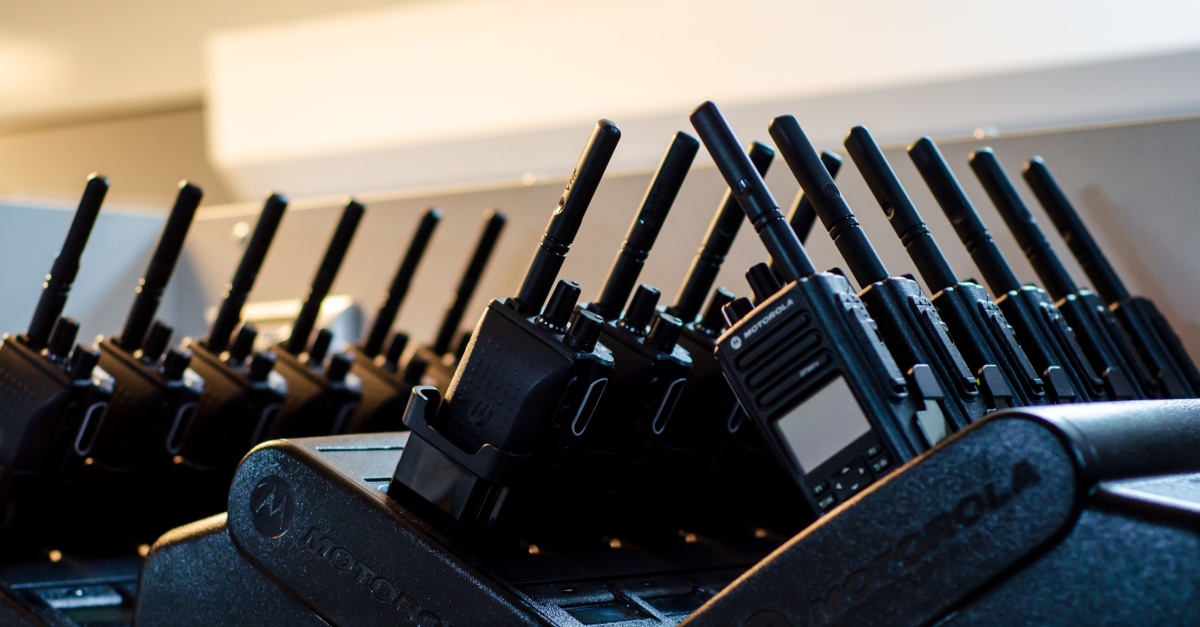
From Walkie-Talkies to Wi-Fi PTT: The Evolution of Warehouse Communication
Warehouse teams run on fast, reliable communication. A missed instruction on the floor can mean a delayed shipment, a picking error, or a safety incident. Research shows 43% of workers say poor communication directly reduces their daily productivity. In a warehouse managing dozens of concurrent tasks at once, that gap adds up fast. Communication tools have changed dramatically over the past few decades, from analogue two-way radios/ walkie-talkies to fully networked push-to-talk systems running over Wi-Fi. This article covers how those tools evolved, what changed at each stage, and what Wi-Fi PTT now offers modern warehouse operations.
How Walkie-Talkies Shaped Early Warehouse Communication?
Before two-way radios became standard, warehouse coordination happened in person. Supervisors walked the floor to relay instructions, written notes moved between departments, and delays were built into the process.
The walkie-talkie changed that. For the first time, teams could communicate instantly across large floor spaces without leaving their station. Supervisors could manage more ground, picking teams could flag issues in real time, and response times shortened.
But the technology had clear limits. Analogue radios shared frequencies, which led to crosstalk and interference in busy environments. Batteries failed mid-shift. Audio quality degraded in noisy warehouses. And with a limited number of channels available, larger operations quickly ran into capacity problems.
Despite those drawbacks, the walkie-talkie set the benchmark for what warehouse communication should deliver: immediate, hands-free, and available at floor level.
The Shift to Digital Radio Changed Warehouse Operations
Digital radio arrived and resolved many of the analogue frustrations. Audio became clearer, channel capacity expanded, and features like GPS tracking, priority calling, and lone worker alerts gave managers a level of oversight that analogue never offered.
Warehouses began segmenting communication by team and zone. Rather than one shared channel for all staff, departments could operate on separate groups, reducing background noise and making coordination more targeted.
Digital radio also introduced better device management. IT teams could push firmware updates remotely, monitor device locations, and review communication logs. That added an operational layer that analogue radios could never deliver.
What Makes Wi-Fi PTT Different From Traditional Radio?
Wi-Fi PTT runs over an existing Wi-Fi or cellular network, rather than a dedicated licensed radio frequency. That one change reshapes the cost model, the coverage options, and the devices teams can use.
With traditional radio, coverage depends on transmitter power. With Wi-Fi PTT, coverage extends across your existing network, which in many modern warehouses spans multiple buildings, mezzanine levels, loading docks, and outdoor yards.
But range is just the starting point. Modern push-to-talk providers like Peak PTT offer rugged 4G LTE and Wi-Fi radios that deliver sub-300ms call latency, built-in GPS tracking with geofencing and route playback, SOS and panic alerts for lone worker safety.
Taken together, these capabilities represent a fundamentally different approach to warehouse communication.
Key differences include:
- Device flexibility: Wi-Fi PTT works on rugged handsets, smartphones, or tablets depending on your environment, so teams can use hardware they already own
- Network integration: Communication flows through existing IT infrastructure, simplifying management and oversight
- Scalability: Adding users means adding an account, not purchasing new radio hardware
- Cost model: Ongoing costs shift from hardware-heavy to subscription-based, spreading expenditure more predictably
- Coverage reach: Network-dependent coverage can extend to multi-site or remote locations that analogue radio cannot serve
For warehouses already investing in connected infrastructure, this shift tends to make both operational and financial sense.
Does Poor Communication Actually Cost Warehouses Money?
Yes. And the impact goes further than most managers account for day to day. A survey of 1,000 employed workers found that 63% had considered leaving their job because poor communication made it too difficult to perform their role effectively. In a warehouse environment where staff turnover already averages 36% annually, that figure carries real weight.
On the operational side, poor communication creates a chain of small failures that compound quickly. A missed radio call becomes a delayed pick. A delayed pick becomes a late dispatch. A late dispatch becomes a customer complaint.
To reduce the impact:
- Audit your current communication flow across each shift and pinpoint where breakdowns most often occur
- Set clear channel or group structures so staff know exactly who to contact for each type of issue
- Require team leaders to confirm receipt of key instructions, rather than assuming messages were heard
- Review your warehouse management systems to check how communication tools integrate with broader operational data
- Track picking error rates and shift performance alongside any communication changes to measure real impact over time
Comparing PTT Solutions: Analogue, Digital, and Wi-Fi
Choosing between analogue radio, digital radio, and Wi-Fi PTT comes down to your warehouse’s size, existing infrastructure, and budget. The table below outlines the core differences to help frame the decision.
| Feature | Analogue Radio | Digital Radio | Wi-Fi PTT |
| Audio quality | Moderate | High | High |
| Coverage range | Limited by transmitter | Extended | Network-dependent |
| Device cost | Low | Medium to High | Variable |
| Scalability | Low | Medium | High |
| IT integration | None | Partial | Full |
| GPS and tracking | No | Yes | Yes |
| Ongoing cost model | Licensing fees | Licensing and hardware | Subscription-based |
Use this as a starting framework. The right choice depends on how your warehouse is built, how your teams are structured, and how your technology plans are evolving. You can read more about how logistics technology is reshaping warehousing to see where communication fits within a wider operational upgrade.
Steps to Roll Out a New PTT System Smoothly
Switching communication systems mid-operation carries risk. A structured rollout reduces disruption and gets your team confident quickly.
Labour costs already account for up to 70% of a warehouse’s total operating budget. Any transition that slows your team down, even temporarily, has a measurable cost. Planning the rollout carefully protects that investment.
- Run a pilot first. Pick one shift or department and test the new system there before deploying across the full operation. This surfaces issues before they affect everyone.
- Audit your Wi-Fi coverage. Dead zones will break PTT reliability. Run a full site survey and resolve any coverage gaps before you go live.
- Train leaders before frontline staff. Team leaders who understand the system can support their teams directly, reducing pressure on IT support during rollout.
- Define communication protocols in advance. Set your channels, groups, and escalation paths before launch day so staff know exactly how to use the system from the start.
- Update your safety procedures. New communication tools affect warehouse safety protocols, including lone worker alerts and emergency escalation paths. Revise those procedures alongside the technology, so nothing falls through the gap.
Conclusion
Warehouse communication evolved because the demands of the operation required it. Walkie-talkies gave teams instant voice contact across the floor. Digital radio added clarity, range, and management visibility. Wi-Fi PTT extended that further, connecting communication into the broader digital infrastructure of the modern warehouse.
Each technology shift brought measurable gains in speed, accuracy, and team coordination. The move from analogue to digital was not an overnight decision for most operations. It happened in steps, driven by a clear need to reduce errors, manage larger teams, and keep pace with faster fulfilment cycles.
The right communication tool for your warehouse is the one that fits your operation today while leaving room to scale tomorrow.
