
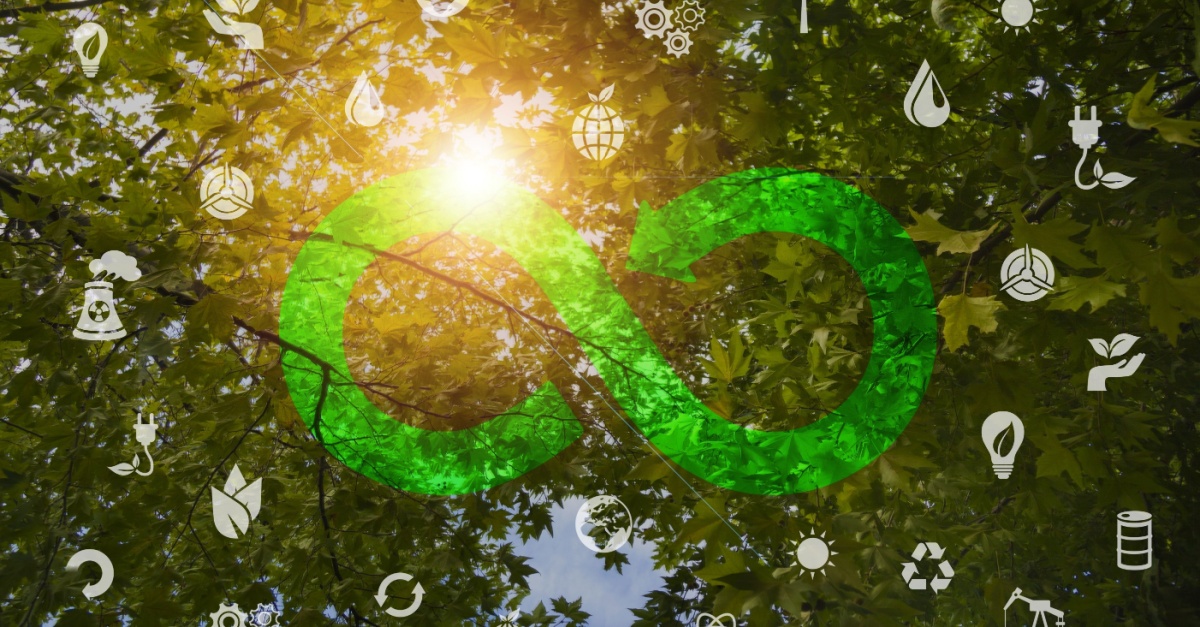
Closing the Loop: Integrating Waste Recovery Into Circular Supply Chain Models
Supply chains generate significant waste at every stage, from raw materials to finished products, creating both environmental and operational challenges. In fact, nearly 8% of all inventory is discarded each year, at a value of roughly $163 billion. Building a circular supply chain advances sustainability, while helping logistics and operations teams cut costs and strengthen resilience. It also allows these teams to capture value from materials that would otherwise be lost. In this article we explore how integrating waste recovery into circular supply chain models will be a necessity in the future.
Waste recovery has become a core operational strategy, with organisations that adopt it early gaining an advantage as regulations tighten and material costs rise. Integrating recovery isn’t a simple process; it requires planning and cross-functional alignment combined with smart use of data. But the operational and financial payoff grows as technology and reverse logistics networks improve.
This includes not only traditional solid waste streams, but also liquid waste and byproducts—areas where waste reduction and reuse strategies can significantly improve resource efficiency and reduce disposal burdens.
The following strategies show how closing the loop can drive both efficiency and sustainability for your organisation.
Laying the Foundation for a Circular Supply Chain
Before moving trucks or redesigning workflows, organisations need clear direction. A strong foundation keeps circular strategies aligned with operational goals rather than becoming siloed sustainability projects.
Waste recovery varies based on factors like industry, product mix, and customer expectations, with some companies prioritising high-value components, while others focus on packaging or byproducts. Aligning on scope early reduces friction.
Understanding where waste is generated (and in what condition) helps identify recovery opportunities and the most efficient points of capture. Quick wins often appear before a full circular model is deployed.
For many operations, waste streams such as wastewater, process residuals, and concentrated byproducts represent some of the largest opportunities for reduction and reuse, even though they’re often overlooked in early planning stages.
Opportunities to explore at this stage include:
- Identify materials consistently in short supply that recovered inventory could supplement.
- Check if suppliers can take back components for refurbishment or reprocessing.
- Assess partner capacity (3PLs, recyclers, repair centres) for nonstandard returns or special materials.
Building a Reverse Logistics Network
A strong reverse logistics system is the backbone of a circular supply chain. Without smooth collection, processing, and routing, waste recovery becomes slow or expensive. Organisations often need multiple collection pathways: customer returns, in-store drop portals, B2B pickups, fleet haul-back routes. The key is designing channels that are easy for end users while efficient for operations.
Once materials arrive, speed and accuracy in sorting determine how much value can be recovered. Combining trained labour with automation — vision systems, RFID tracking, material-classification tools — helps teams handle mixed materials at scale.
But not all recovered materials go to the same endpoint: some are refurbished, while others are recycled. Some are remanufactured. Routing should respond dynamically based on fluctuating commodity prices, repair capacity, customer demand, and other factors.
Turning Recovered Materials into Value
Circularity works only when recovered outputs feed back into the supply chain or generate revenue. That involves quality standards and specialised partnerships, along with performance tracking. Recovered materials often vary in condition, so clear acceptance criteria and standardised testing ensure predictable inputs for production lines or partners.
Some materials require unique equipment or processing. Building partnerships with recyclers or remanufacturers expand these capabilities without major capital investment. Tracking the quantity, quality, and value of recovered materials helps identify what generates ROI and what needs redesign. Industrial waste reuse becomes a tangible opportunity here, especially for organisations with large byproduct streams.
In many industries, this includes recovering usable water, reducing liquid waste volume, and repurposing concentrated byproducts—important components of a broader waste reduction and reuse strategy.
RMIS data shows that raw-material extraction and processing carry some of the highest environmental impacts in global supply chains, making recovery loops for metals, minerals, and/or other high-impact components even more valuable. Recovering materials before they are wasted means operations teams reduce upstream environmental burdens, while maximising the value of the materials they already have.
Additional strategies to expand material value creation include:
- Benchmark recovery rates against industry peers to find improvement gaps.
- Experiment with secondary markets for refurbished or lightly used components.
Closing the Loop Strengthens the Supply Chain
Integrating waste recovery offers distinct business advantages and environmental improvement. Logistics and operations teams that build circularity into their networks can cut material costs and protect against supply disruptions, while uncovering new revenue opportunities. Even more importantly, a closed-loop model strengthens long-term operational efficiency.
As waste reduction and reuse practices evolve, organisations increasingly recognise the value of managing all waste streams—solid, liquid, and byproduct—in ways that support both circularity and operational resilience.
Organisations that start now position themselves as leaders in a future where circularity is a baseline, not an optional process.
Author bio:
Catharine Reid is Chief Marketing Officer at Heartland Water Technology, a company advancing sustainable solutions for the toughest industrial wastewaters — from landfills to power plants. She leads Heartland’s marketing, communications, and commercial strategy, shaping how the company positions its Concentrator technology across key markets. With more than two decades of experience driving growth for technology and environmental companies, she brings a strategic and creative approach to scaling innovation in water and waste management.
CLICK HERE to access The Sustain Chain magazine from IoSCM for free.
SOURCES
https://rmis.jrc.ec.europa.eu/environmental-impacts-along-the-supply-chain-3dfccf
https://blog.3ds.com/topics/sustainability/circular-logistics-and-reverse-flows/
https://rmis.jrc.ec.europa.eu/environmental-impacts-along-the-supply-chain-3dfccf