
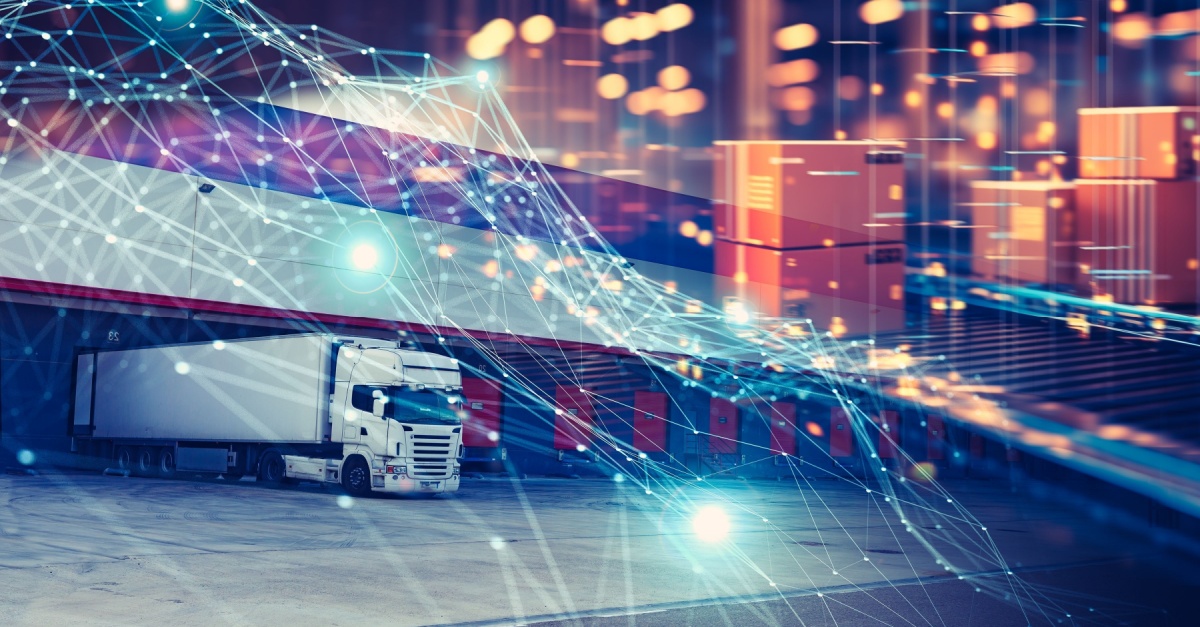
Artificial Intelligence (AI) in Logistics
Artificial Intelligence, once an inconceivable idea found only in science fiction films, is now a staple of daily life. Each online search, each smartphone navigation, and each social media scroll is moulded by AI software. This fact is never truer than in the logistics industry. AI has seeped into every element and process, driving efficiency, forecasting accurately, and optimising routes. As the logistics sector faces mounting pressure to move faster, smarter, and more efficiently, AI has emerged not only as a tool but as a force reshaping the supply chain.
Demand Forecasting
AI-driven demand forecasting is powering logistics: enabling companies to predict future needs with precision. By analysing significant historical data in tandem with real-time variables (geopolitics, market trends, consumer behaviour), AI models can anticipate demand fluctuations before they occur. AI-driven demand forecasting has been shown to reduce stockouts up to 65% and lower cut errors by 30-50%.
This level of foresight empowers inventory-level optimisation, enhances resource allocation efficiency, and prevents overstock and stockouts. Machine learning algorithms continually learn from new data, ensuring accuracy and agility. In this, AI reinforces the supply chain in an increasingly unpredictable global economy.
Risk Management
Disruptions in operation are not only a time sink but can be exceedingly expensive. Machine learning programs work to counter this, identifying potential risks before they occur. Much like for demand forecasting, an AI program will analyse data: monitoring and assessing risk factors across the entire supply chain. These factors range from track congestion to supplier delays to adverse weather. These systems collect data from various sources, identifying patterns and anomalies.
Risk Management programs are not only reactionary; instead, they perform a key strategic function: precautionary assessments. These precautionary measures are implemented through data-driven simulations, in other words, acting out risk scenarios to develop contingency plans and respond with speed and precision. As a result, businesses can minimise downtime, reduce financial losses, and maintain service reliability even in volatile environments.
Dispatching
Artificial intelligence is revolutionising dispatching, enabling real-time, data-based decision-making. This decision-making empowers route optimisation, fuel cost reduction, and delivery time improvement: dynamically assigning and rerouting deliveries for maximum efficiency.
AI-powered dispatching systems integrate seamlessly with truck telematics, providing real-time visibility into vehicle location and driver behaviour. This technology allows for adaptive scheduling, automated delay alerts, and continuous optimisation as conditions change. AI tools have historically resulted in fuel savings ranging 15% or more. Machine learning tools enable high-volume operations to reach their full potential, minimising empty miles and idle time.
As labour shortages and consumer expectations rise, the value of AI in logistics only continues to grow. The competitive advantage earned through machine learning tools forges streamlined operations and agile responses.
Contracting
Contracting, a once highly manual and tedious process, can be refined and accelerated with AI. Natural language processing enables machine learning models to review and generate contracts, identify key terms, flag adverse clauses, and ensure consistency with legal standards. These models can also analyse past agreements to benchmark average prices, terms, and performance metrics, allowing companies to negotiate with an advantage.
AI can track contract cycles, alerting stakeholders to renewed deadlines and compliance requirements. By automating these routine tasks, AI empowers logistics teams to manage agreements more effectively, reduce risk, and improve supplier relationships.
Compliance, Maintenance, & Safety
Compliance and safety aren’t negotiable; they are life or death. Trucking accidents can result in lost freight, lawsuits, and, most grievously, loss of life. AI is tasked with reducing these losses. Predictive diagnostics and real-time sensor telemetry allow companies to detect and address equipment issues before they escalate. Subtle irregularities in engine wear, brake systems, or tyre pressure can be flagged early (often weeks in advance), enabling proactive repairs. This data-driven approach improves fleet reliability, safety, and punctuality.
Safety risks can be monitored and alleviated with dashcams and telemetric tools. With these, AI can track driver behaviour, identifying signs of fatigue, distraction, or unsafe driving in real-time. These dangers can trigger direct alerts, log incidents, and trigger corrective actions.
On the compliance front, AI automates the monitoring and enforcement of regulatory requirements across jurisdictions. From scanning carrier certifications to reviewing customs/border documentation, Artificial Intelligence ensures adherence through real-time audits and alerts. Simultaneously, machine-learning models can flag potential violations before they are penalised. Together, these AI-driven advancements forge a logistics environment that is faster, safer, and fully compliant.
TMS Software
Artificial intelligence has fundamentally reshaped the world of Transportation Management System (TMS) software. Once stagnant, programs are now adaptive, proactive, and intelligently designed. Traditional TMS platforms primarily emphasise planning and freight movement. AI-enhanced systems, on the other hand, can go far beyond, learning from vast datasets and making real-time, data-driven decisions.
With machine learning, TMS software can optimise routes, predict delays, automate carrier selection, and negotiate rates based on market conditions. Natural language processing empowers users to simplify their workflow, automating menial tasks and minimising manual input. AI-powered analytics can provide deeper insights into performance, costs, and risks, allowing logistics teams to execute strategic decisions with greater agility.
The Future of AI
The global logistics AI market was projected to reach $5.75 billion by the end of 2025, growing at a compound annual growth rate (CAGR) of roughly 42.6%. This growth is matched with development as providers scale intelligent forecasting and optimisation solutions. Every day, machine learning is shaping the logistics industry; are you ready to follow suit?
Article by Sofija Jiotis, Contributing Writer, Amous International.
