

What Procurement Teams Should Know Before Buying Mixing and Storage Tanks
Procurement teams need to keep several considerations in mind when evaluating mixing and storage tanks. Understanding the factors that lead to poor equipment purchases can help prevent selecting tanks that do not fit the intended process. This guide outlines key considerations for choosing mixing and storage tanks that support reliable day-to-day production.
Industrial mixing tanks are critical in many industries and often sit at the centre of the production process. Understanding what goes into selecting a quality mixing and storage tank can save time and money in both the short and long term.
What Procurement Teams Need to Know Before Buying Industrial Mixing Tanks
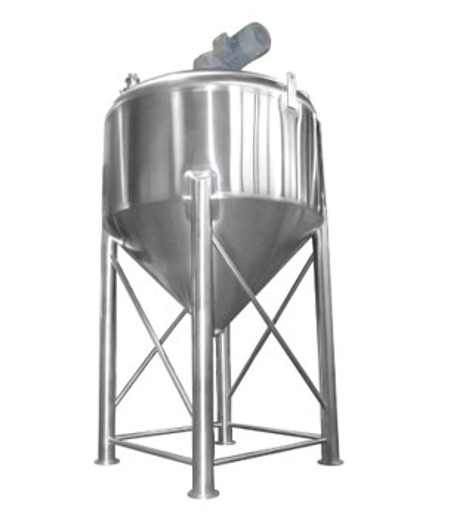
Stainless steel mixing and storage tank: Photo courtesy of Cedarstone Industry
Procuring mixing and storage tanks does not need to be overly complicated. The key is identifying the process variables and project requirements before comparing equipment so that the selected vessel is appropriate for the intended industry and application. There’s no reason to purchase tanks on guesswork, and yet many companies do so each year.
Beautiful promises from the businesses that make these products cannot replace actual research. You need to take the time to verify that the tanks that you are investing in are going to work for your needs. If you are operating on guesswork and hopes, you are almost certain to end up with the wrong storage and mixing tanks.
This guide will help you look at all the right factors to be sure that you are going to have the storage and mixing solution that you need most. These are the factors that you should have in mind as you look at purchases or upgrades.
1. Material Selection Matters For Many Reasons
Material selection should be based on the product, cleaning chemistry, operating temperature, and corrosion risk. In sanitary food and beverage processing, 304 and 316L stainless steel are common choices. 316L is often selected where greater corrosion resistance is required, while 304 can be suitable for less demanding applications. Carbon steel and certain plastics may be appropriate for other industrial storage applications, depending on the process conditions.
2. Industry Requirements and Regulations
Procurement teams should confirm that the tanks being purchased meet the applicable requirements for their industry and process. Food, beverage, and dairy applications may require sanitary design considerations, while pharmaceutical applications can involve more rigorous documentation and traceability requirements.
If the vessel will operate under pressure or vacuum, procurement teams should determine the applicable design code and regulatory requirements early in the project. Where an ASME Section VIII code-stamped pressure vessel is required, the vessel must be designed, fabricated, inspected, and documented accordingly.
3. Heating, Cooling, Insulation
Heating and cooling requirements should be evaluated based on the product, required temperature change, available utility, heat-transfer area, and allowable heating or cooling time. Depending on the application, vessels may use dimple jackets, conventional jackets, half-pipe coils, or other heat-transfer designs. Jacket selection should therefore be based on the required thermal duty and operating conditions rather than tank capacity alone.
Insulation and cladding may also be required for temperature control, energy efficiency, personnel protection, or process stability. The insulation system and outer cladding should be selected according to the operating environment and sanitation requirements.
4. Cleaning and Maintenance
Cleanability should be considered during the initial vessel design rather than after installation. Tanks intended for Clean-in-Place (CIP) operation should incorporate sanitary product-contact surfaces, appropriate weld finishes, proper drainage, and strategically selected spray devices while minimising areas where product or cleaning solution can become trapped.
The cleaning approach should be selected according to the process and sanitary requirements. Some removable components may be cleaned using Clean-out-of-Place (COP) methods, while properly designed tanks and process piping can often be cleaned automatically as part of an integrated CIP system.
5. Delivery and Lead Times
Lead time is an important procurement consideration, particularly for custom stainless steel tanks. Engineering approvals, fabrication, inspection, shipping, and site installation can all affect the overall project schedule.
Procurement teams should also plan for transportation and installation requirements. Depending on vessel dimensions and site conditions, oversize-load permits, escorts, rigging, cranes, or special offloading arrangements may be required. Addressing these requirements early can reduce avoidable delays and added project costs.
6. Fluid Properties
Fluid properties need to be a consideration when you are shopping for storage and mixing tanks. Viscosity, specific gravity, temperature ranges, corrosiveness, and solid suspension matter. These factors have a lot to do with the design of your storage and mixing tanks and can also require that you pick certain kinds of horsepower and impeller types. Fluid properties are one of the key aspects of this kind of buying decision, so being sure that you are clear about what is necessary for your storage and production processes is important to your buying decision.
7. Tank Sizing
What is the point of getting a storage or mixing tank for your business if it’s the wrong size to support your business needs? You should be sure that you know how much product or material you need to store and you need to be sure that you are picking out the right size tanks so that your business can thrive and grow. Don’t just think about today. Think about the future as you select tank sizing and design.
8. Mixing Mechanisms
This choice is linked to #6. You need to have the right mixing mechanisms in place for your mixing tanks, or they will not serve your purposes at all as a business. There are various kinds of mixing mechanisms that can be used in tanks of this kind. You might want high-viscosity and wall-scraping mechanisms for your tanks, or maybe high-shear mixers for emulsions. Mixing mechanisms are important for storage as well as production.
9. Total Cost of Ownership
Another factor that is sometimes forgotten about is the total cost of ownership. The initial cost of purchase is not the only factor that you need to have in mind. You will need to pay for upkeep, repairs, downtime, cleaning services, and possible other surprise costs. These added costs are all part of your investment, and they can dictate what you can and cannot afford when it comes to your storage and mixing setup.
If you are not sure how much these costs will run, a qualified supplier should be able to give you ballpark information about the costs of use and ownership of their products. You should also have some data from previous products in this category. Even if you have owned lesser quality or less efficient products for storage and mixing, you will still have some necessary data that you have collected about the cost of upkeep, repairs, and other expenses that you can use to make an informed purchase.
10. After-Sales Support
Not all companies are created equal when it comes to after-sales support. You want to work with a business that will stand behind their products and make things right if you run into issues. Be sure that there is a call centre or point of contact for assistance that you can access, and check on warranties and other guarantees from the seller. If there are no such promises or perks, it might be wise to shop around to another supplier.
The after-purchase support package that is part of buying storage and mixing tanks is something that many people don’t think about hard enough when they are shopping. Having a product that you have purchased that suffers a failure or a problem and not being able to access assistance to resolve the issue can lead to high costs and stress that could have been avoided if you verified this aspect of the product from the start.
11. Supplier Guidance and Assistance
Sometimes, you aren’t sure what you need to buy. This is where supportive and helpful suppliers can clarify your buying decisions. If you cannot find the information that you are looking for, that’s a red flag. Supplier guidance should be easy to access. You shouldn’t have to struggle to figure out which of their products is the right product for your needs.
Guessing is always a bad way to purchase anything. If you have to guess about which product is the right one, the supplier is probably not the right one to work with. This is an important part of your purchase process. Suppliers that step up to help out are the right choice for companies looking for a long-term working relationship that they can count on.
12. Testing and Verification of Quality
Businesses that stand behind their products do so because they have tested the items that they make, and they can prove that their products will perform. You should be able to get test results to verify that you are purchasing the right tanks for your industry specifications. Testing is one of the things that all businesses in this space should always do, and they should make their product testing results easy to access.
If you cannot get your hands on test results and information, that’s a problem. Be sure that if you do have access to testing results, that you also read them and understand what they mean. If you are not sure what these test results indicate, be sure that you have someone interpret them for you to clarify the points that you don’t understand.
Procurement of Storage and Mixing Tanks Can Be Straightforward to Order With the Right Information in Mind
When evaluating mixing and storage tanks, procurement teams should begin with a clear understanding of the production process with the right information in hand. Product characteristics, utility requirements, cleaning method, installation constraints, and applicable standards. Equipment should be selected around the actual process rather than capacity alone.
Documentation is also an important part of supplier evaluation. Procurement teams may need to review weld maps, general arrangement drawings, and material test reports. Depending on the project, documentation may also include surface-finish requirements, pressure-test records, component certificates, and applicable code or sanitary documentation.
The more clearly these requirements are defined before an order is placed, the easier it becomes to compare suppliers and select equipment that supports reliable production over the long term.
