
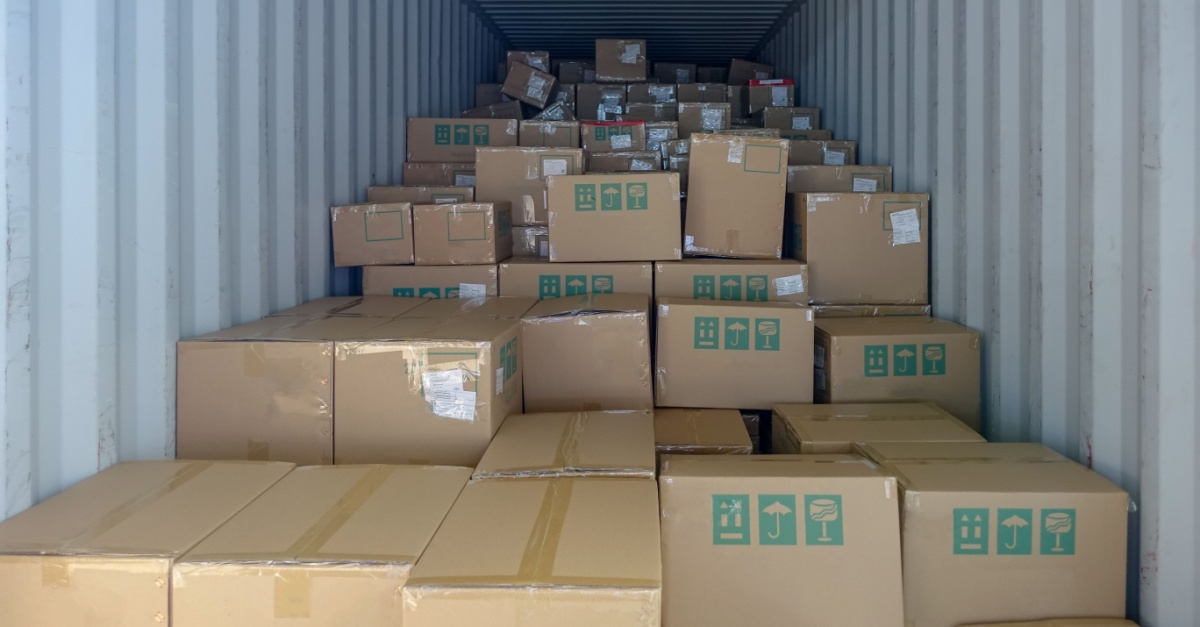
Reducing Shipping Damage and Logistics Costs Through Packaging Optimisation
Modern supply chains have a new endemic on their hands and it goes by the name of “shipping damage”. In the year 2024, 85 million packages had arrived on customer doorsteps in a damaged state. Visible losses arising from such damages are only a part of the story. While rejected deliveries and returned goods might be easy to quantify, they do not begin to cover the true extent of financial losses shipping damages result in. Reducing shipping damage is now vital.
From immediate replacements to hidden costs that reveal themselves through reverse logistics, administrative handling, insurance claims, and production scheduling, each of these is a hefty price to pay.
Not to mention the effect this has on customer experience and trust. Fast delivery is now a basic expectation, and customers will not tolerate shipping errors or damaged goods. Both can quickly erode brand trust, and send them to your competitors. The result? Lost future business in a market that is highly competitive to begin with.
Operationally, damage is a harbinger of disruption. Warehousing teams have to manage returns as transporting schedules go haywire and inventory accuracy declines. Shipping damage may have its roots in packaging issues but it branches far and wide to cover the entire supply chain, revealing a deeper structural inefficiency that must be immediately addressed.
Why Packaging is a Strategic Lever, Not an Operational Afterthought
Most businesses treat packaging as a downstream activity. They only start thinking about it after the product in question has been designed and the logistics for it have been finalised. This is a counterproductive approach as packaging is the most influential and easiest to control pain-point in the entire supply chain.
Packaging decisions play a huge role in the way goods move, how they are handled, and how they are eventually stored and transported. Get it right and you can stabilise loads, reduce movement during transit, and minimise the likelihood of damage. Get it wrong, and the converse happens – operational complexity and damage risks increase significantly.
If that was not enough, packaging also directly influences logistics efficiency. Handling speed and transport utilisation can take a hit if packaging does not account for the product’s dimensions, weight distribution, and stacking capabilities. What might seem like small design changes can have a major positive impact on loading density and shipping frequency if these issues are promptly addressed.
That’s why many companies operating in the supply chain sector and specialising in material handling and packaging systems, such as Norpak Handling, have shifted gears to focus on load stability. The main agenda is to reduce transit-related damage with the help of integrated solutions such as conveyor systems that keep protective packaging intact and ready for the long haul. This shift in priorities points to an integrated approach that treats packaging as an essential part of the supply chain.
Key Drivers of Shipping Damage and Cost Escalation
Shipping damage is not an isolated phenomenon. It is the result of multiple inefficiencies interacting with each other across the supply chain.
Let’s talk about inadequate protection during transit. Irrespective of the product, the packaging used to cover it cannot fail the test of real-world conditions. Vibration, compression, and temperature fluctuations are a given. If the packaging material used doesn’t address these concerns, damage is inevitable.
Handling complexity should be accounted for as well. Frequent movement of goods, whether it is to transfer them or just reposition them, can increase the likelihood of impact-induced damage. Multiple touchpoints that are a part of large distribution networks can increase this risk – especially if the packaging used is not robust enough to withstand multiple rounds of handling.
The disconnect between packaging design and actual transport conditions is another factor to blame for damage. When products packaged for stacking are transported among mixed loads, the resultant misalignment can cause damage rates to shoot through the roof, consequently driving up logistics costs.
Integrating Packaging Optimisation into Supply Chain Strategy
The solution is not to merely use better quality packaging. That should be the norm. The best way to course correct is to treat packaging as an integral part of the supply chain strategy. That means rethinking packaging design to ensure it can make a full logistics journey without as much as a scratch.
An end-to-end packaging design overhaul based on critical factors such as stacking strength, load stability, and compatibility with automated systems can help organisations proactively weed out causes of damage from the entire system.
Alignment with transport and storage systems can take this a step further by ensuring the final packaging seamlessly integrates with pallet configurations, warehouse layouts, and handling equipment. The result is improved material handling with minimal movement that lowers damage risk and enhances operational efficiency.
The key is to balance standardisation and customisation when making critical packaging decisions. Standard packaging is a simple and an elegant choice for complex large networks. Meanwhile, customised solutions ensure niche products get the kind of protection they need in transit. Adopting a hybrid model is the most optimal approach as it prioritises the right packaging type for the product in question.
Role of Equipment and Handling Efficiency in Damage Prevention
While redesigning packaging is essential, it is still only Part One of a Two-Step plan. Part Two involves the efficient physical handling of goods within the supply chain. Inefficient handling practices can find the Achilles’ heel of even the most robust packaging systems.
Ergo, warehouses and distribution systems must offer a safe and controlled way to move goods. That includes resolving issues such as poor material flow, abrupt handling, and congested layouts as they increase the likelihood of damage. Manual handling has the same effect, and should be replaced with more viable material handling systems.
For example, specialised equipment is necessary to prevent damage to products positioned or installed at greater heights. Sophisticated machines such as Platform Basket Canada’s boom lifts can help in the maintenance of both safety and product integrity by offering precise and controlled movements during material handling tasks.
Measuring the Impact: Cost Savings and Operational Gains
Optimising packaging is more than a smart move. It is the single most effective way to reduce damage rates and bring about a plethora of benefits whose ripple effects can be felt throughout the supply chain.
Think about it. Lower damage rates means fewer product recalls and returns. This, in turn, reduces replacement costs and administrative burden. Add it all up, and over time businesses will witness a measurable improvement in overall cost efficiency. Moreover, better packaging design improves delivery reliability, resulting in consistent lead times and higher customer satisfaction.
The string of benefits continue as optimised packaging also supports more effective space utilisation in terms of material movement, storage, and transport. This might seem like an incremental improvement but it has a major impact on long-term operational efficiency.
Most importantly, each of these benefits compound over time, creating a stable and predictable ecosystem that reduces contingency costs and improves the overall resiliency of the supply chain.
Future Outlook: Packaging as a Competitive Advantage
As every item – large or small – turns into a doorstep-delivery eligible product, packaging is set to be a strategic asset in supply chain performance. That said, sustainability pressures will push the adoption of lighter, recyclable materials that do not compromise on robustness or durability. Simultaneously, digital technologies will power improved tracking, testing, and optimisation of packaging performance.
Integration with digital supply chain systems will significantly improve visibility, allowing organisations to monitor packaging performance across varying environments and conditions to support continuous refinement of materials, shapes, and sizes.
Ultimately, businesses that treat packaging as an integral part of their supply chain will be better positioned to improve its resiliency while reducing associated costs and risks.

Norpak Handling is a manufacturer and supplier of high-quality conveyor systems purpose-built for the task of material handling. Custom conveyors are available, and the company also offers a host of other services including conveyor system consultations, project management, conveyor simulation, installation and maintenance and repair services. For enquiries, email info@norpak.com or call +1-905-885-7674.
