
How Do Air Compressors Work and What Type Is Right for Your Operation?
Many modern industrial facilities rely on a consistent supply of compressed air to power essential tools and automate complex processes. Often described as the ‘fourth utility’ alongside electricity, water and gas, compressed air plays a fundamental role in global manufacturing and logistics. Understanding the underlying mechanics of these systems allows operations managers to make informed procurement decisions. Whether a business manages a small repair workshop or a high-output production line, selecting the correct machinery ensures long-term efficiency and reliability.
The Fundamental Principles of Air Compression
Air compressors operate by forcing atmospheric air into a smaller volume, which increases the air pressure significantly. This process involves a transition from mechanical energy, typically provided by an electric motor or a gas engine, into potential energy stored as high-pressure air. Most systems utilise a mechanical system that physically reduces the space available to the air molecules.
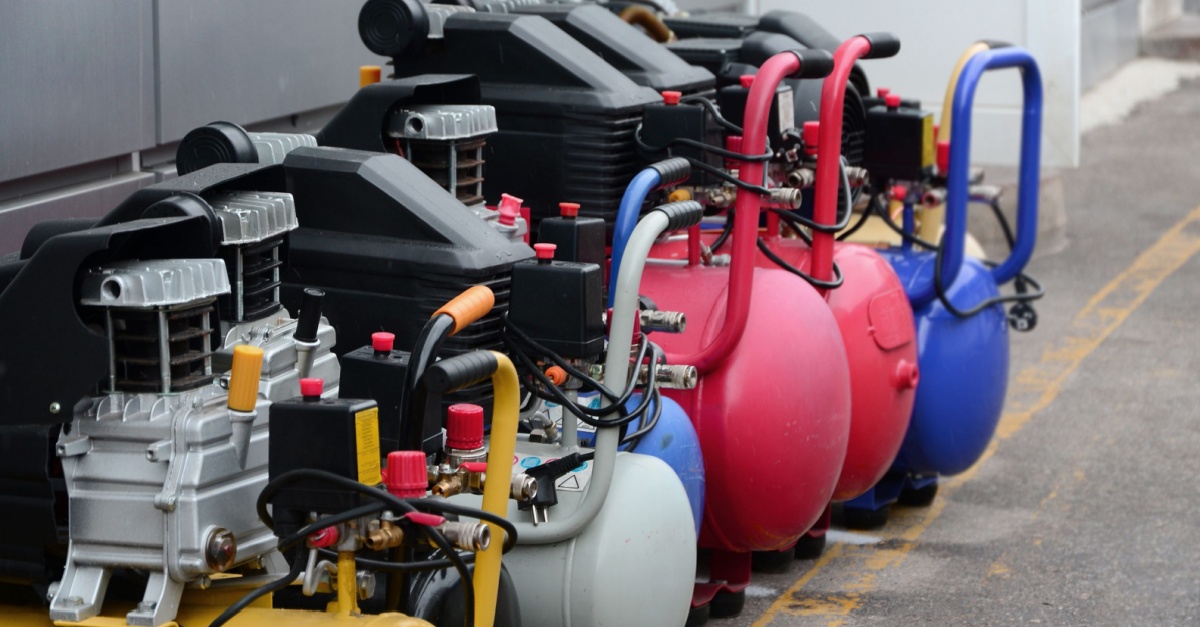
When the compressor activates, an inlet valve opens to allow ambient air into a compression chamber. Depending on the design, a piston or a screw then compresses this air. Once the air reaches the required density, a discharge valve releases it into storage tanks or directly into the distribution line. For many businesses, investing in high-quality air compressor equipment is vital because these units must withstand constant thermal stress and friction. To maintain peak performance, operators must monitor oil levels regularly to ensure all moving parts remain lubricated and cool.
Comparing Positive Displacement Technologies
Most industrial applications utilise positive displacement compressors, which work by trapping a fixed volume of air and reducing the size of the chamber. The most common variety is the reciprocating compressor. This unit uses a piston moving within a cylinder. During the compression stroke, the piston rises, reducing the volume and forcing air through the valve head into the system. These are ideal for intermittent use where high pressure is more important than continuous flow.
Alternatively, many facilities prefer rotary pumps or rotary screw compressors for continuous operations. These units use two interlocking helical screws to move air through the chamber. Another variation is the rotary vane compressor, which uses a series of blades mounted on an offset rotor. As the rotor turns, the vanes slide in and out to create pockets of varying sizes, compressing the air efficiently. Unlike reciprocating models, these designs provide a pulse-free flow of air, making them suitable for sensitive automation sectors.
Exploring Dynamic Displacement and Specialist Systems
While positive displacement is common, some large-scale operations require dynamic displacement technology. These compressors, such as centrifugal models, use rapidly rotating impellers to accelerate the air. The kinetic energy then converts into pressure as the air slows down through a diffuser. These systems excel in environments requiring extremely high volumes of air at constant pressure levels.
The choice of machinery often depends on the available power sources. While most indoor facilities use electricity, remote construction sites may require a unit with a fuel supply and a spark plug for ignition. Regardless of the power source, the air often requires treatment after compression. Using air filtration and industrial filters removes contaminants that could damage downstream tools. Furthermore, air dryers are essential to eliminate moisture, which prevents corrosion within the pneumatic lines and ensures the longevity of the entire setup.
Control Mechanisms and Pressure Regulation
Safety and efficiency in a compressed air system rely on precise pressure regulation. A pressure switch serves as the primary control mechanism, automatically starting or stopping the motor based on the air levels inside the air tank. This prevents the system from over-pressurising or running unnecessarily when demand is low. Operators can monitor the real-time status of the system via a pressure gauge, which provides a visual readout of the current internal force.
To fine-tune the output for specific tools, a regulator valve adjusts the discharge pressure to the exact requirement of the application. This ensures that a tool designed for low pressure does not receive an excessive burst that could cause mechanical failure. The relationship between motor horsepower and the size of the storage tanks determines how much work the system can perform before the motor must engage again. Balancing these factors helps businesses reduce energy consumption and mechanical wear.
Selecting the Right System for Your Operation
Choosing the appropriate compressor requires a thorough analysis of your specific operational demands. You must first calculate the total Cubic Feet per Minute (CFM) required by all your pneumatic tools combined. If your team uses tools simultaneously, the compressor must provide a higher CFM than the total sum to avoid performance drops. Additionally, consider the duty cycle; a reciprocating compressor may overheat if forced to run 100% of the time, whereas a rotary screw model thrives under constant use.
Consider the environment in which the machinery will reside. Noise levels, ventilation, and the need for oil-free air (common in food or pharmaceutical production) will dictate whether you need a standard lubricated unit or a specialist oil-free model. Finally, assess the total cost of ownership rather than just the initial purchase price. Energy-efficient models might cost more upfront, but will significantly reduce utility bills over the lifespan of the equipment.
Conclusion
Air compressors are vital assets that drive productivity across countless industries. By understanding the mechanical differences between reciprocating, rotary, and dynamic systems, operations managers can select equipment that aligns with their specific volume and pressure requirements. Proper maintenance of filters, monitoring of lubrication, and the use of sophisticated regulation valves further ensure that the system remains a reliable component of the facility. Investing time into the selection process today prevents costly downtime and energy waste tomorrow, securing a more resilient and efficient operational future.
